
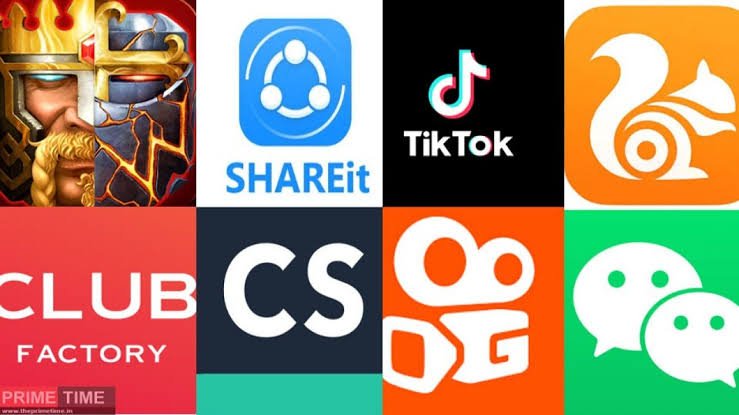

Scores of latest Chinese apps have flooded Indian app stores in the previous few months together with numerous rebranded variations of programs banned by the authorities in latest months bringing up danger to national security. For instance, Snack Video, released by Tencent-backed Kuaishou, is just like Kwai, an earlier offering by the Chinese organization that was banned in June.
Snack Video, which has already gathered large range of Indian customers, is likewise replicating functions of the banned famous short-video app TikTok, owned through ByteDance.
Similarly, the banned Hago app, which allowed people to create chat rooms with strangers and additionally play video games with them, has been changed by an app referred to as Ola Party. While the brand new app does not provide the gaming option, it has imported the sign-in in addition to the present profile, buddies and chat rooms from Hago, a evaluation through ET showed.
In reaction to queries from ET on the ongoing availability of banned apps and rebranding of a few apps, a senior government official said, “this must not be the case. If that is happening, we can take in the matter.” The ministry of electronics and IT (MeitY) has issued advisories that none of the banned Chinese apps must be available in any form.
It has additionally banned near forty seven clones which have arise in the weeks following its initial action in June. Kuaishou didn’t reply to ET’s queries. Other app groups couldn’t be immediately reached. Experts are of the view that India is just too profitable a market to lose for Chinese businesses and they’d make every attempt to return.
“If the app ban doesn’t subside in a few months, banned apps in new avatars will crop up. The Indian Internet market is obviously hard to ignore for the Chinese or other companies,” said Santosh Pai, Partner, Link Legal India Law Services. “The new trend will be of the Chinese developers teaming up with Indian developers to mitigate political risk and launching the apps, as one does not need enormous amounts of capital to launch an app—anywhere between $2 million and $5 million is enough,” said Pai.
App businesses may also take the path of registering offices in Southeast Asian nations to break out the geopolitical tensions, he added.
In a few cases, Indian customers are reporting that banned apps just like the chatting app Mico, even though eliminated from app stores, keep to function on phones in which it is pre-installed.
