
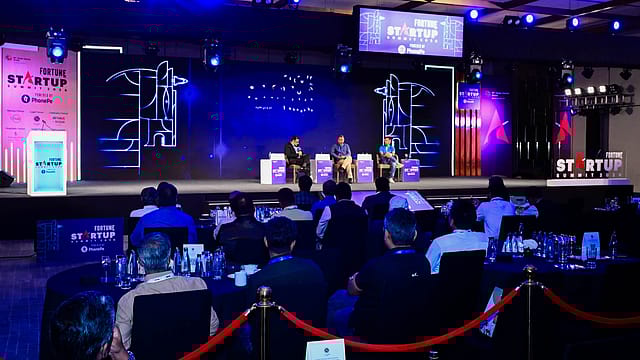

Fortune India’s Startup Summit 2026 in Bengaluru drew founders, investors, policymakers and ecosystem players this week, but the conversation wasn’t just about rapid scale or valuations — it was about building enduring value, harnessing artificial intelligence, and solving real problems for ‘Bharat’. Experts said the focus is shifting from scale-first growth toward sustainable, impact-driven innovation that works for both urban markets and the millions of customers in India’s smaller towns and rural regions.
At the core of this new narrative is the idea that AI and capital must be tools for solving local challenges, not just products of hype. Speakers at the summit emphasised that startups need to design AI solutions in regional languages and address everyday pain points — such as access to credit, local supply chains, agriculture, healthcare and services — rather than building solutions that only work for metro-based users.
AI Beyond Buzzwords
While artificial intelligence dominated many discussions, leaders cautioned against treating AI as a universal silver bullet. Some founders called for a pragmatic blend of technology and real-world utility, and stressed that simply stacking the latest large language models won’t automatically translate into impact. Instead, startups should focus on experimentation, use case validation and layered models tailored to specific sectors and languages.
Echoing this sentiment, other participants highlighted the importance of trust, transparency and hyperlocal delivery in user adoption. Rather than lowering prices in cut-throat competition, companies should prioritise outcomes, ethical design and consumer empowerment — especially for users who have historically been underserved by digital services.
Capital That Follows Value, Not Valuations
Investors at the summit underscored a notable shift in capital dynamics. Funding is gradually moving away from quick growth at all costs toward value creation, unit economics and long-term return potential. Early-stage funding remains robust, and venture debt is gaining traction as startups seek alternatives to equity dilution. The emphasis is increasingly on business fundamentals, profitability pathways and market-fit over headline-grabbing valuations.
This shift mirrors broader trends in India’s startup ecosystem, where late-stage funding has dipped even as early-stage rounds remain strong — reflecting investor caution about future exit prospects while still backing well-positioned, problem-solving ventures.
Bengaluru’s Evolving Identity
In parallel with the summit’s themes, Karnataka officials used the platform to highlight their state’s integration of advanced technology with manufacturing, aerospace and sustainability sectors, signalling that the innovation hub’s identity is expanding beyond its traditional concentration in software and IT services.
Bharat as the Next Frontier
Perhaps the most recurrent idea at the summit was the need to look beyond metros and design for “Bharat” — a shorthand for India’s diverse non-metro population. AI and startup solutions targeting these markets could create significant social and economic value if they address local languages, affordability challenges, and culturally relevant service patterns.
As India’s startup sector matures, experts believe that making innovation inclusive — so it serves both India’s digital elite and its broader population — will be a defining theme for the next phase of growth, helping the ecosystem shift from hype to sustained, inclusive value creation.
